

The Industrial Explosion
This post was inspired by this LessWrong piece about how an industrial explosion (a rapid increase in manufacturing capacity) would look like. TLDR the maximum speed would be a one time 10x increase in physical production from AI’s perfecting existing companies, an acceleration from robot autonomous factories doubling every 6 years, and the rate itself doubling (ie to 3 years) every 6-30 years. Finally an exponential almost biological growth from nanotechnology.
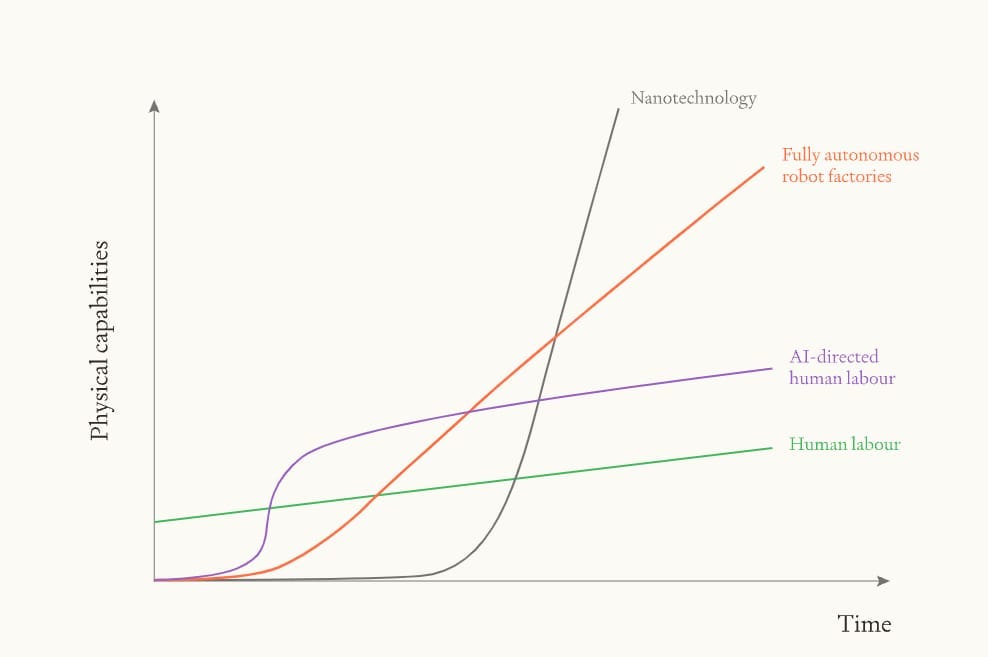
On the whole the premise of physical growth just strikes me as wrong. My thesis is:
output industrial minerals (copper, lithium, rare earths) etc cannot increase easily
plus as societies become more economically advanced, they are less likely to allow resource exploitation that damages the environment
therefore both the physical capacity to increase production of these resources will not be built in time for the early parts of the industrial explosion to take place
Instead, the physical constraints will remain until the AGI discovers a new tech stack that overcomes resource limitations (like nanotechnology)
Essentially I think AGI will have to play the game on hard mode, with highly constrained industrial capacity growth, requiring breakout tech to overcome, rather than incremental increases using current tech.
Let me give you an example
Copper
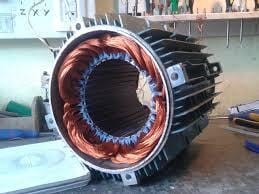
This is a motor, you run electricity through a copper wire in a magnetic field, the motor moves, and voila you have converted electrical energy into mechanical energy.
This is a generator. You move this in a magnetic field, which causes current in the copper wires to flow, and voila you have converted mechanical energy to electrical energy. (I apologize for the simplification).
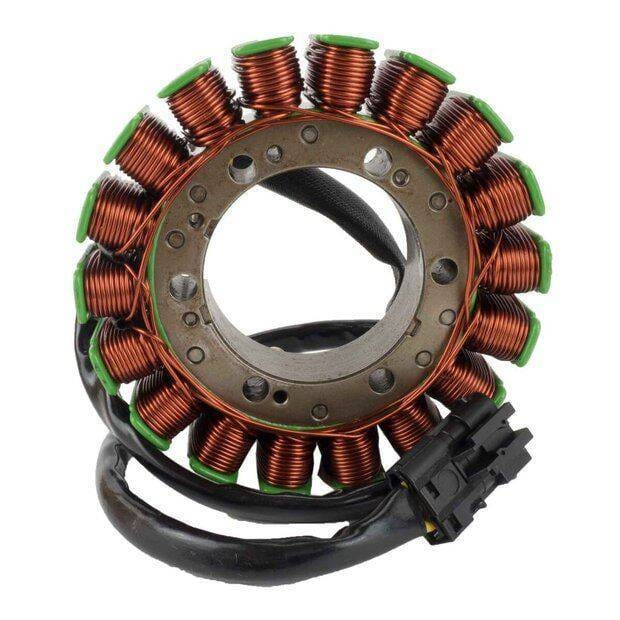
In short, copper is what we build electrical things with, transmission lines, solar panel wiring, robot motors. A typical photovoltaic solar power plant will use 5.5 tonnes of copper per MW.
And we’ve gotten really good at using copper over a hundred years, we’ve highly optimized what we do with it, and the amount we use.
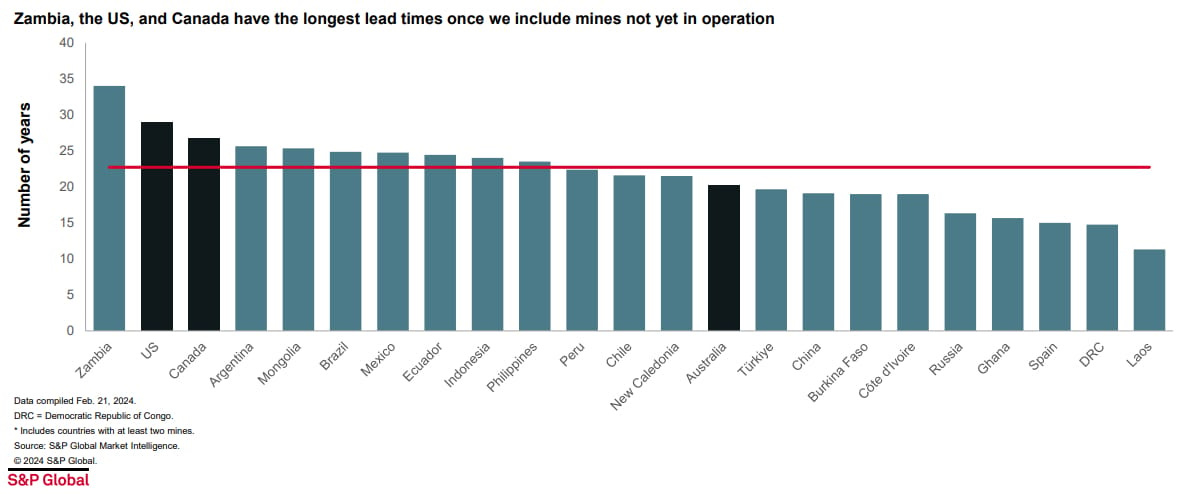
It takes roughly 30 years to get a mine from exploration to production in the US. The US has the second longest time in the world. What about the shortest? Best case: In Laos, where presumably the Chinese pay off every one and rush in with the bare minimum of permitting: 10 years.
Let me say that again: 10 years is the best case.
Why does it take so long? Well you basically split the issue into two buckets: the developed economy bucket, and the developing economy bucket.
In the Developing Economy, you don’t have infrastructure to even get your drilling team to the exploration site, you somehow have to have them travel the hard way to get there. Once the discovery is made, all of a sudden you have to buy the mining permit again, then you have to buy the land for mining, then the land for the infrastructure. Does anyone have clear legal title? Nada. You’re talking about communal village land that everyone in the village has a right to, and guess what the third cousin of the chief is not happy with his share. Oh you ask, surely this is an authoritarian dictatorship where the military can ensure you can pay a fair price and construct this… Well after you’ve paid them their share, you find out that military also doesn’t like being in the boondocks, they go off to the capital leaving your development team in the dark, in a village filled with people who you just crammed down.
This litany of negotiations, lack of clarity on legalities, etc, also delays raising financing for the project, as your financiers want more certainty that they’ll eventually get paid. All of the above pushes up costs, and you’re working against a volatile 7+ year price cycle, where at the trough point, your costs will be high enough that you’re producing at a loss. Meanwhile while your mine is getting built political changes happen, and now you have to pay off a new set leaders.
This largest copper discovery of this century in Oyu Tolgoi in Mongolia followed this pattern. The chairman of the company Robert Friedland (who was Steve Jobs guru at Reed College in the 70s!) said he ended up buying the same mine 3 times from the Mongolian government, while fending off the Chinese.
In the Developed Economy the major advantage you have is that the rules are supposed to be clear. They are, but there also a great many of them, and you can be sued. The lawsuits pile up, and investors keep injecting money into these firms. It is fairly typical over a 30 year cycle to get into production for the same asset to change owners multiple times, as each exhausts their capital and sells hopes and dreams to the next starry eyed investor.
Most projects stay in this zone of possibility, until something dislodges them. It could be a sudden discontinuous price increase, like thermal coal going from $10/tonne to $100/tonne in the early aughts. All of a sudden projects that don’t pencil at a certain cost, do, and the game is on. But there is also the possibility that the dream ends.
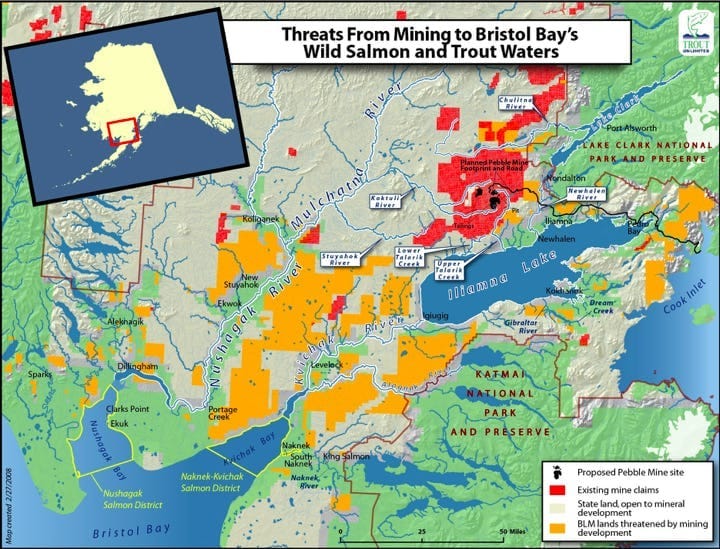
Developed economies have highly motivated, agentic environmentalists, fisherman, hunters, tourists, who co-ordinate to stop progress. Above is map for the proposed Pebble Mine in Alaska, a copper-molybdenum mine which would have produced $350 billion of resources but also threatened salmon fisheries in the area. It was discovered in 1987.
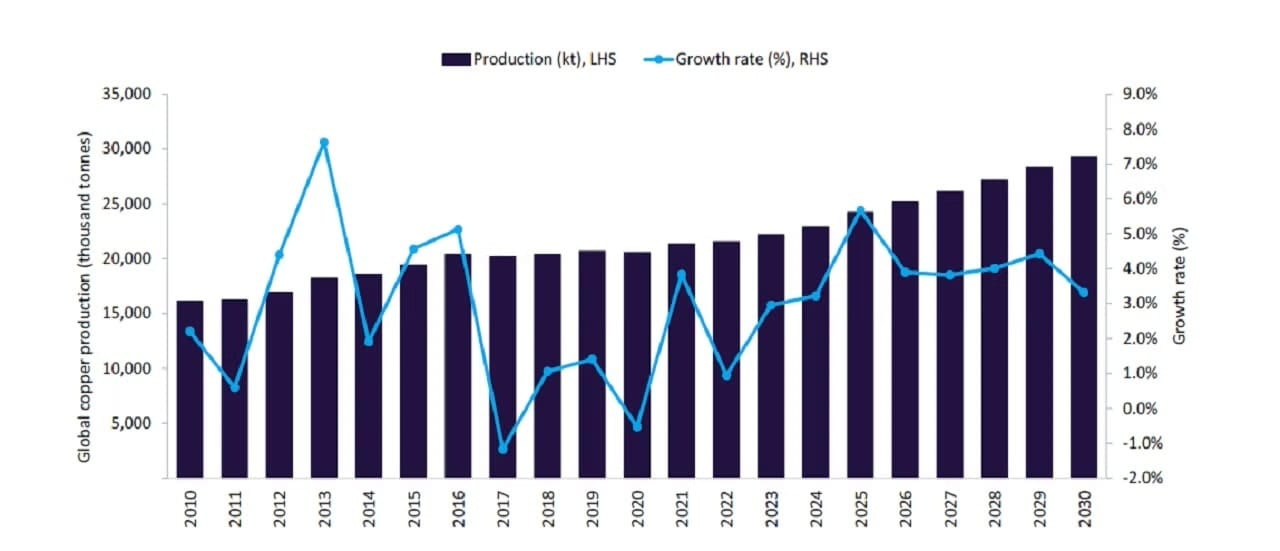
Given the timelines for new mines, you can pretty much predict primary copper supply to 2030, roughly 20% growth to 30,000 kilotonnes. No exponentials here.
Bottlenecks
I think the above shows quite clearly that given our existing tech stack, it would be ludicrous to expect the first two of the Less Wrong industrial explosion scenarios. These bottlenecks in materials would be replicated in every part of the stack, in lithium and nickel for batteries, in rare earths, in plastics and hydrocarbons and synthetic materials. The resource endowment we have to work with for the next 5 years is essentially fixed, depending on the resource growing between 1% and 10% per year.
This is even before the human bottlenecks, again humanity just doesn’t like industry that much, and people will fight to not have it interfere in anything they do. They don’t want to see it, they don’t want it near them, they don’t want it polluting their salmon. The richer they are, the more they’ll fight.
Superintelligent Tech Stack
So what does this leave us? The Superintelligence will have to create new technology that overcomes these resource hurdles. It could look like accelerating asteroid mining. It could look like going straight to nanotechnology while avoiding the robot economy. Room temperature superconductors so that you could substitute copper with something significantly more efficient. There are many potential “magical” pathways, because after all it would be a technology so sophisticated that it would seem that way to us.
On the misaligned side, it could be subversion of our political systems to enable large scale and rapid mining, dumping enormous amounts of pollution into the atmosphere. But somehow this seems like an idiotic outcome for a supposed ASI to choose.
I rest.